Projects
Here you will find an overview of all our ongoing and completed projects and research.
Ongoing Projects and Research
School Partnerships: Collaborating to Strengthen Health and Physical Education in Schools in the City and District of Bayreuth

We see physical activity and sport as a key foundation for the healthy physical, mental, and social development of children and adolescents. Together with students and teachers, we develop lesson concepts, projects, and best-practice examples, which we implement and evaluate directly in schools.
Create YOUR Campus – University Health Management: Healthy Living, Working, and Studying at the University of Bayreuth

Since 2014, the University of Bayreuth has been developing a comprehensive university health management program in cooperation with Techniker Krankenkasse. Its aim is to create and sustainably embed health-promoting conditions for employees and students alike.
Scientific surveys provide the basis for identifying needs and resources and for deriving effective recommendations to foster a health-promoting university culture.
MindMotion: Experiencing Mental Health Through Movement and Nature
This project focuses on students’ mental health by integrating exercise and nature as key health resources into everyday university life. It develops and tests evidence-based, participatory measures designed to support student well-being in the long term.
A central component is the Co-Creation Lab, where students, faculty, and various university departments will work together to develop tailored measures in 2026–2027. This participatory approach aims to foster a university culture in which mental health and physical activity are integral to the academic experience and visibly embedded in teaching, campus life, and the strategic development of the University of Bayreuth.
NEBB Update: Update and Further Development of the National Recommendations for Physical Activity and Physical Activity Promotion
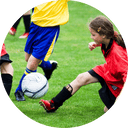
The NEBB-Update project, conducted by FAU Erlangen-Nürnberg, aims to update existing national physical activity guidelines based on the latest scientific findings and to further develop them in a practical manner through sector-specific working groups that include stakeholders from politics, the professional field, and academia.
We support and advise the NEBB project, including on the development of a concrete methodological approach for updating the scientific evidence underlying physical activity recommendations—with a special focus on low-intensity physical activity and planetary health—as well as by facilitating the participatory process for developing recommendations on physical activity promotion in the education sector.
Men’s Health at the Health Resort
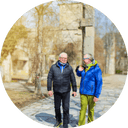
Exercise and health are at the core of the Men’s Health at the Health Resort project. The Men’s Health prevention program, previously evaluated at the municipal level, is now being adapted to the health resort context. During a compact one-week program, men-specific exercise formats are combined with health-resort-based interventions and educational content.
The implementation will be scientifically monitored and evaluated in a pilot study at the Bad Weißenstadt am See health resort in 2026.
Upper Franconia’s World of Movement – Active and Physically Literate Children
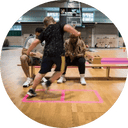
The Bayreuth Physical Activity Check examines how active and physically fit primary school children in the city and district of Bayreuth are. In addition to motor skills, motivation, self-confidence, self-perception, and knowledge related to an active lifestyle were also assessed in 2024 and 2026—summarized under the concept of physical literacy.
The aim of the study is to better understand the relationships between these factors and to further develop scientifically grounded approaches to promoting physical activity in childhood.
Physical Literacy in the German Context - Developing a Shared Understanding

This project aims to develop a shared understanding of physical literacy in Germany. In collaboration with other sport science institutions, a consensus-based definition is being developed that describes the concept’s central dimensions while taking into account the specific characteristics of German physical activity, play, and sport culture.
Active Mobility and Visual-Spatial Skills
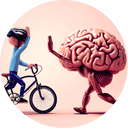
This project investigates how active mobility—such as walking or cycling to school or in everyday life—can support both physical performance and spatial-cognitive abilities. Through several studies involving children and adults in Germany and Australia, researchers examine which forms of active mobility are particularly effective and how changes in mobility behavior influence brain activity and cognitive functioning.
The goal is to generate new insights that contribute to more effective strategies for health-promoting physical activity and cognitive performance.
Physical Activity and Cognitive Performance

This research examines how regular physical activity and short movement breaks in schools, universities, and workplaces influence key cognitive functions such as attention, concentration, and reaction speed. With a public health perspective, different forms of physical activity are analyzed to determine which measures are particularly effective and how they can be sustainably integrated into everyday educational and work settings.
The aim is to develop evidence-based strategies that enhance cognitive performance as well as health, well-being, and motivation.
Mental Strength in Sports

This research explores how mental strength in sport—from recreational to competitive levels—can be measured reliably and developed systematically. Using a combination of quantitative and qualitative methods, as well as several complementary small-scale projects with partners in the field, the focus is on improving objective assessment tools and mapping mental performance factors more precisely.
The aim is to make mental strength more visible in order to sustainably enhance both athletic performance and well-being, satisfaction, and long-term commitment to sport.
Mental and Psychoregulatory Training in Sports

This research examines how mental and psychoregulatory training methods are used in rapidly growing trend sports such as CrossFit and Hyrox—areas in which, despite high competitive demands, structured mental training is often still lacking. Using a mixed-methods approach that includes questionnaires, interviews, and small-scale experiments, the project identifies current practices, typical barriers, and potential mechanisms of action.
The aim is to better understand how amateur athletes who move quickly into competitive environments can be mentally strengthened and supported more sustainably.
Completed Projects
Capabilities for an active lifestyle: An interactive knowledge-to-action research network for health promotion (2015–2022).
Capacity-building in a community setting: promoting the participation of men over the age of 50 in physical activities by strengthening the role of key persons in the community (sub-project within the BMBF research network CAPITAL4HEALTH)
Health in Physical Education. Implementation and Evaluation in Schools and Teacher Education (subproject within the BMBF research network CAPITAL4HEALTH)
Objectives
The overall objective of the Health.edu subproject is the sustainable development of sports-related health literacy among students. Sub-goals relate to (1) the implementation of the topic of health in physical education and physical education teacher training, (2) the evaluation of the developed methodological, didactic, and structural measures as well as their effectiveness, and (3) the development of best-practice teaching modules.
Website
Achieved results
In Health.eduPLUS, lesson plans on the topic of health in physical education were developed in collaboration with physical education teachers, school administrators, students, and researchers.
Project period
- Phase 1: 01.04.2015 to 31.03.2018
- Phase 2: 01.04.2018 to 30.06.2021
Funding
The CAPITAL4HEALTH research consortium consists of seven subprojects with national and international partners.
Overall objective
Research and development of strategies for promoting active lifestyles in various settings (preschool, school, workplace, and community) by improving individual competencies and organizational structures.
Subproject Health.edu
Collaborative project between the Universities of Bayreuth, Erlangen-Nuremberg, and Augsburg (Overall project leadership: Prof. Dr. R. Sygusch, FAU Erlangen-Nuremberg)
UBT Project Leader
Prof. Dr. Susanne Tittlbach
UBT Project Staff
Dr. Katharina Ptack (formerly Heß) 2014-2022
Cooperation partners
- Policy: Bavarian State Ministry of Education and Cultural Affairs (BKWK), Ministerial Representatives (secondary schools, high schools) of the administrative districts of Middle Franconia and Swabia
- School/Physical Education: Markgräfin-Wilhelmine-Gymnasium Bayreuth and Graf-Münster-Gymnasium Bayreuth
Research Design
Development and implementation of lesson modules: collaborative planning and implementation of a school-specific concept in physical education over 15 months
Process and Outcome Evaluation:
- Pre-intervention assessment: Analysis of the implementation of subject-specific pedagogical and curricular requirements in physical education
- Implementation: Focus on transdisciplinary research with the goal of interactive knowledge exchange among representatives from sports science, school practice (physical education teachers, school administrators, students), and educational administration (State Ministry, ISB); includes the steps (1) planning, (2) implementation of planned measures, and (3) ensuring sustainability.
- Follow-up study during and after implementation: Analysis of the sustainable implementation of planned measures
Data collection:
Document analysis of Lehrplan plus (elementary schools), questionnaire to assess sports-related health literacy among students, video-assisted classroom observation in physical education, problem-centered stimulated recall interviews with physical education teachersData analysis:
Qualitative content analysis and descriptive and inferential statistical data analysisQuality campaign for physical education teacher education (PETE)
A project to increase the quality of physical education and teacher education (PETE) as it relates to professional and cultural diversity (2016-2023).
Students BeWegt 2.0
The project “Students BeWegt 2.0“ is a continuation of the project “Smart Moving“ and focuses on physical activity and sedentary behaviour among students at the university.
University Health Management
Since 2014, the research project "Prevention of work-related health hazards and introduction of a university health management system at the University of Bayreuth" has been carried out in cooperation with Techniker Krankenkasse in order to introduce a health management system at the University of Bayreuth.
Increasing physical activity and reducing sedentary behavior on campus among students
The project is running as a pilot project at two Bavarian universities, the University of Bayreuth (13,000 students) and the University of Regensburg (21,500 students), in 2018 and 2019. The two universities have common features, but also certain differences. One cooperative planning group per university will be introduced, and there will be an information event and other communication measures for a competition inviting ideas to raise student awareness on the topic. Part of the evaluation addresses the extent to which mobility-enhancing measures can be implemented at a higher education institution with/without an accompanying approach to a healthy higher education institution.
Objective
Increasing physical activity and reducing sedentary behavior among students
Project period
March 2018 - December 2020
Financing
Techniker Krankenkasse
Integration
SmartMoving cooperation project as part of the overall project “Eating habits and their associated costs in Bavaria”
Project board
Prof. Dr. Susanne Tittlbach, Prof. Dr. Claas Christian Germelmann, Dr. Sascha Hoffmann
Project assistant
Jessica Helten
Collaborating partners
Techniker Krankenkasse, Competence Center for Nutrition (KErn), University of Bayreuth, University of Regensburg
Theoretical fields
Health Sciences, Communication/Information Sciences, Sports Medicine, Sports Education, Sports Psychology
Topics
Physical activity in everyday life at universities, physical activity in daily life, behavioral and situational prevention
Content-related objectives
The primary objective of the SmartMoving collaboration project is to increase physical activity in the university setting, primarily by boosting daily physical activity on campus, but also by reducing so-called “sedentary behavior.” The project targets the student population. Through a participatory process, measures to promote physical activity are developed in collaboration with university staff and representatives of the target group, tailored to the needs of each university. The focus is on encouraging environmental interventions and nudging. The process is being implemented at the Universities of Bayreuth and Regensburg. The results of the project will be published and made available to a broad audience with the aim of facilitating implementation in other settings as well.
Study Design
Empirical study, quantitative research design, longitudinal study
Data collection
Standardized written survey of the target group as well as quantitative methods: A convenience sample of approximately 300 students per university (Bayreuth and Regensburg) will be surveyed via a quantitative questionnaire administered by the University of Bayreuth. In a subpopulation of approximately 30 students per university, a more detailed assessment of daily physical activity will be conducted using Actigraph devices, and body composition will be measured using bioimpedance analysis.Data Analysis
Descriptive and inferential statistical data analysis